
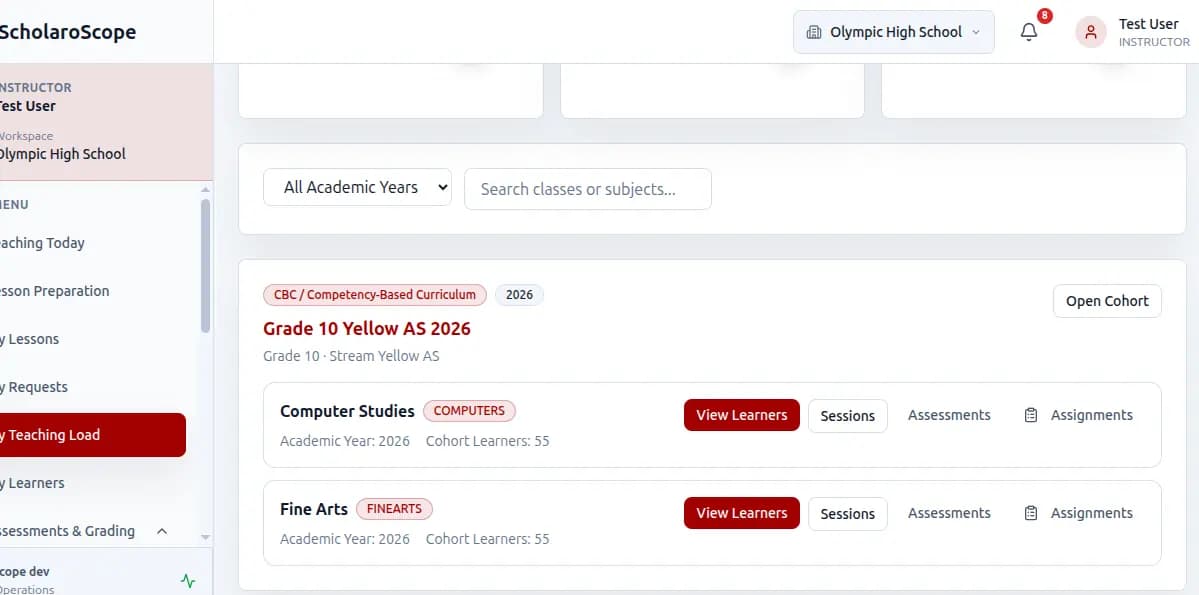
Teaching load stays scoped to assigned classes and subjects.
Teachers can move from assignment scope to learners, sessions, assessments, and class work without needing administrative access.
Teaching evidence and academic workflow
Scholaroscope connects lesson records, attendance, assignments, assessments, and competency evidence in one teaching workflow - so progress reviews and reports are based on what actually happened in class.
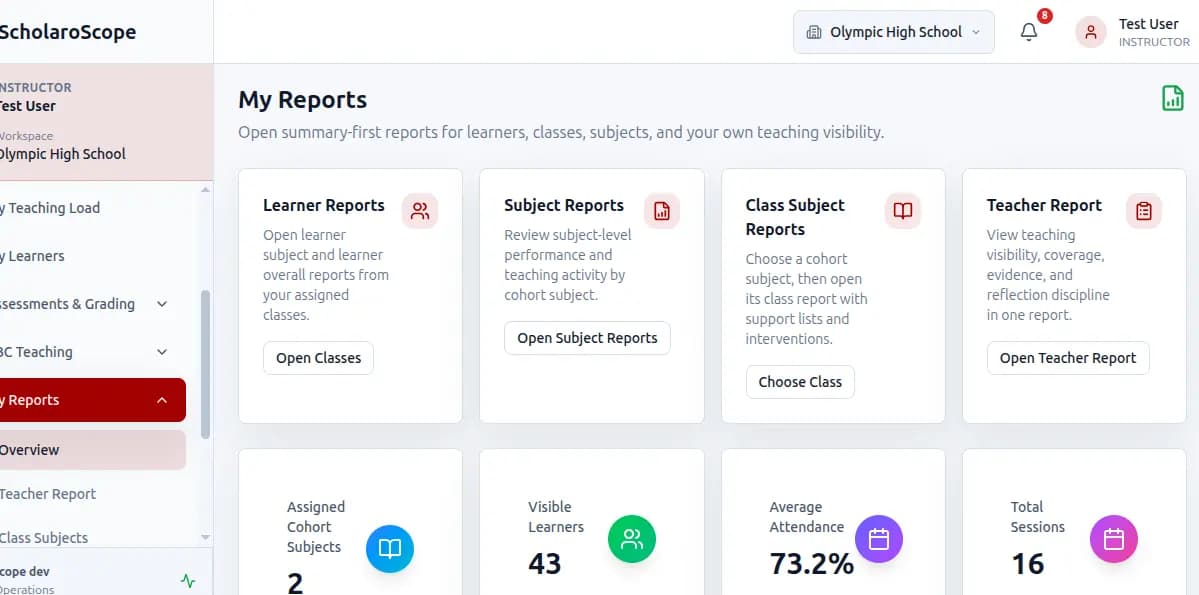
Scholaroscope is built around the daily evidence teachers already create: lessons, attendance, learner tasks, assessment decisions, curriculum links, and progress notes.
Lessons happen in one place, attendance in another, and learner work somewhere else.
Assessment marks explain results, but not always the teaching context behind them.
Report time becomes a reconstruction exercise instead of a review of evidence.
Record lessons, class context, and teaching activity as work happens.
Connect attendance, assignments, assessments, and competency evidence to the learner record.
Use the connected record to prepare class, subject, learner, and teacher reports.
Scholaroscope keeps evidence close to the classroom workflow so reporting reflects the teaching record.
Teachers can move from assignment scope to learners, sessions, assessments, and class work without needing administrative access.
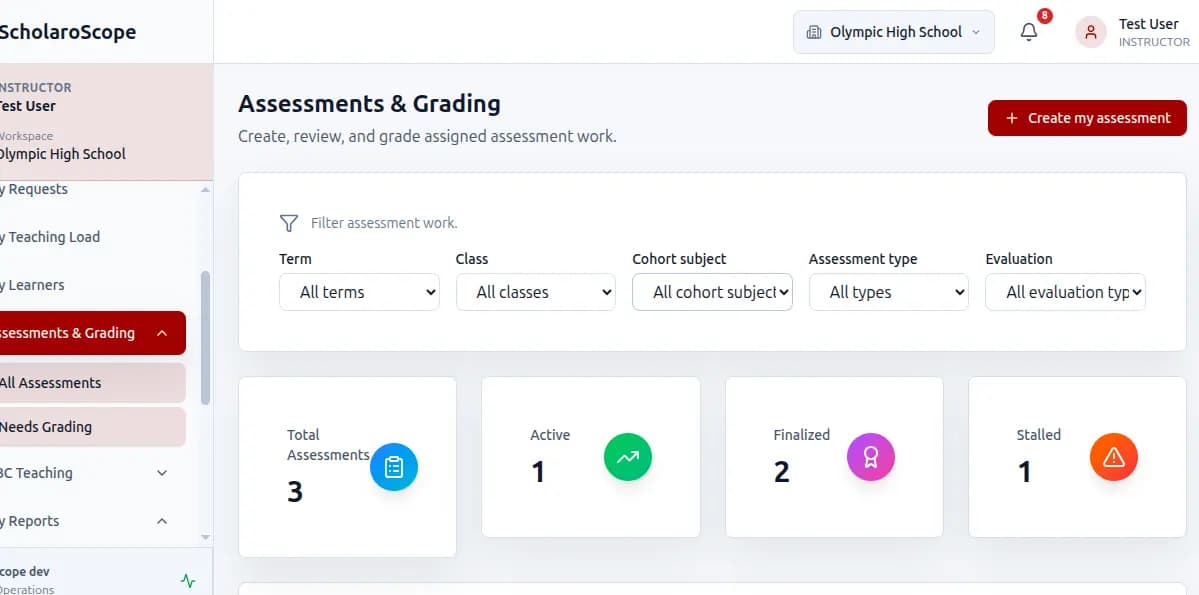
Assessment setup, review, grading, and report evidence sit close to lesson and learner records.
Create a workspace for your own classes, keep teaching evidence organized, and prepare progress conversations from actual records.
Give teachers a structured workflow for lessons, attendance, learner work, assessments, curriculum evidence, and reports while keeping responsibilities scoped.
Built from real classroom workflow in Kenya.
Practical answers about who Scholaroscope is for and what it supports today.
Yes. An independent teacher can create a workspace for their own classes and keep lesson, attendance, learner work, assessment, and report evidence together.
You can manage lesson records, attendance, learner work, assignments, assessments, curriculum evidence, learner progress, and teacher reports.
Current product areas include CBC/CBE and Cambridge teaching workflows. Other curricula should be treated as upcoming until they are explicitly available in the workspace.
Yes. Schools and learning centres can use scoped workspaces so teachers see their assigned teaching work while administrators manage the broader academic setup.
Start with your workspace, then connect classes, lessons, attendance, learner work, assessments, and reports.